As of August 24, 2026, CoinGecko displayed a Lisk market cap of approximately $22.1 million with 233.085 million LSK in circulation, while CoinMarketCap displayed approximately $21.6 million with 225.77 million LSK in circulation (CoinGecko, CoinMarketCap). These timestamped figures illustrate how provider methodology and update timing can produce different results.
Data provided by CoinGecko.
Why can a token trading for only a few cents still create misleading impressions about its market impact? The answer starts with separating price, market capitalization, liquidity, and exchange availability. Lisk's chart can show a dramatic percentage move while the asset remains a relatively small market-cap token with potentially limited order-book depth on particular venues.
For advanced charting users, the practical question isn't whether Lisk is rising or falling. It's whether the market-cap figure reflects the supply available to trade, whether different aggregators are measuring the same supply base, and whether the symbol is available on the centralized exchanges being monitored.
Table of Contents
- Lisk Coin Market Cap Snapshot: August 24, 2026
- Understanding Lisk Coin Market Cap Calculation
- Where to Find Live Market Cap Data
- Interpreting Market Cap Tiers and Risk
- Tracking Lisk with TradingView-Compatible Watchlists
- Future Shifts in Lisk Coin Market Cap
Lisk Coin Market Cap Snapshot: August 24, 2026
At the August 24, 2026 observation point, CoinGecko reported a market cap of approximately $22.1 million and 233.085 million circulating LSK, while CoinMarketCap reported approximately $21.6 million and 225.77 million circulating LSK (CoinGecko, CoinMarketCap).
The variation does not necessarily indicate an error. It reflects differences in price timestamps, circulating-supply estimates, provider methodology, and update timing. These values are dated observations, not permanent figures.
Why the range matters
Market cap is useful for comparing assets, but it can mislead when users compare values captured at different times. On August 24, 2026, CoinGecko and CoinMarketCap used circulating-supply figures of approximately 233.085 million LSK and 225.77 million LSK, respectively. Two providers can therefore apply the same basic formula to different supply inputs and produce different results (CoinGecko, CoinMarketCap).
The low-cent price also creates a psychological distortion. A move of a small fraction of a dollar can represent a substantial percentage change, yet the token's total valuation may remain modest compared with larger crypto assets. Price alone says little about the capital represented by the entire circulating supply.
Practical rule: Treat the displayed market cap as a timestamped estimate, then check the circulating-supply field before comparing Lisk with another asset.
Lisk's historical range reinforces the need for context. CoinMarketCap records an all-time high of $39.31, while CoinGecko records an all-time high of $34.92 and an all-time low of $0.07027 on August 3, 2026 (CoinMarketCap, CoinGecko). Both sources place the current price more than 99% below their recorded peaks. Historical price extremes describe volatility, but they don't reveal current liquidity or the depth available on a specific exchange.
Understanding Lisk Coin Market Cap Calculation
The basic formula is straightforward:
Market capitalization = current token price × circulating supply
Circulating supply means the portion of tokens considered publicly tradeable. CoinGecko describes market cap using the current price multiplied by circulating supply, and defines circulating supply as the amount available to the public (CoinGecko). That definition separates market cap from calculations based on every token that could eventually exist.
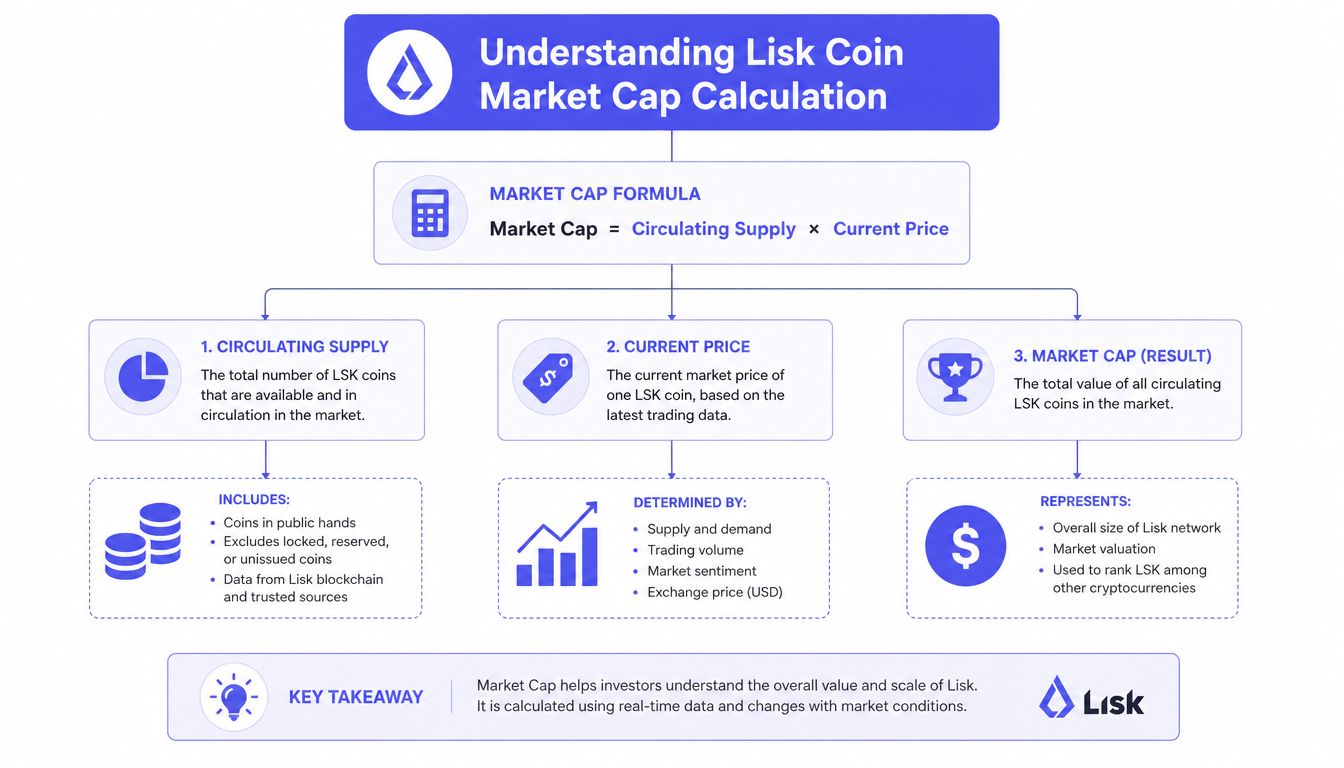
Circulating supply versus maximum supply
Lisk's stated maximum supply is 400 million LSK. On August 24, 2026, CoinGecko reported 233.085 million circulating LSK, while CoinMarketCap reported 225.77 million (CoinGecko, CoinMarketCap). A token can therefore show a market cap based only on coins currently counted as circulating while still having additional supply outside that calculation.
Fully diluted valuation, or FDV, applies the token price to the maximum or fully available supply. Because Lisk's stated maximum supply exceeds the circulating supply reported by both providers, its fully diluted valuation is higher than its circulating market cap. The precise ratio changes with the provider's price and supply inputs (CoinGecko, CoinMarketCap).
That distinction matters for valuation comparisons. A circulating market cap answers, “What is the value of the supply currently counted as tradeable?” FDV asks, “What would the valuation be if the full stated supply were included at the same price?” Neither metric explains future price direction, but the gap identifies potential supply exposure.
A simple calculation example
Suppose a data provider uses a low-cent LSK price and a circulating supply near its reported range. Multiplying those two inputs produces a market cap in the same broad range reported by aggregators. Change either input, and the result changes immediately.
A supply adjustment can therefore alter market cap even if the chart price barely moves. Conversely, a price move can change market cap while the supply field remains unchanged. Traders comparing snapshots should record the price timestamp and supply estimate together rather than copying the market-cap number alone.
Where to Find Live Market Cap Data
CoinMarketCap and CoinGecko are useful starting points, but their Lisk pages shouldn't be treated as interchangeable displays of one exact number. On August 24, 2026, CoinMarketCap showed approximately $21.6 million with 225.77 million circulating LSK, while CoinGecko showed approximately $22.1 million with 233.085 million circulating LSK (CoinMarketCap, CoinGecko).
The differences can arise from several practical causes:
- Timestamp differences: Price and market cap change as markets trade.
- Supply methodology: Providers may publish different circulating-supply estimates.
- Market coverage: Aggregators can process venue data differently.
- Update timing: A supply or market adjustment may not appear on every page simultaneously.
A verification routine for chart users
A disciplined workflow begins with one aggregator and a second-source check. The trader records the displayed price, circulating supply, market cap, and timestamp, then checks whether the second provider uses a materially different supply estimate.
TradingView provides venue-specific LSK charts, such as an LSK/USDT symbol page, while CoinLore is a separate market-data provider. TradingView can be used to verify the chartable pair and venue; market cap and supply should be attributed to the provider that publishes those figures (TradingView, CoinLore).
Data discipline: A market-cap figure without its supply estimate and timestamp is incomplete for comparative research.
Traders who need broader screening can use a crypto screener workflow to organize symbol universes before opening charts. The purpose is not to replace source verification. It's to make comparisons repeatable across the selected venue or market-cap group.
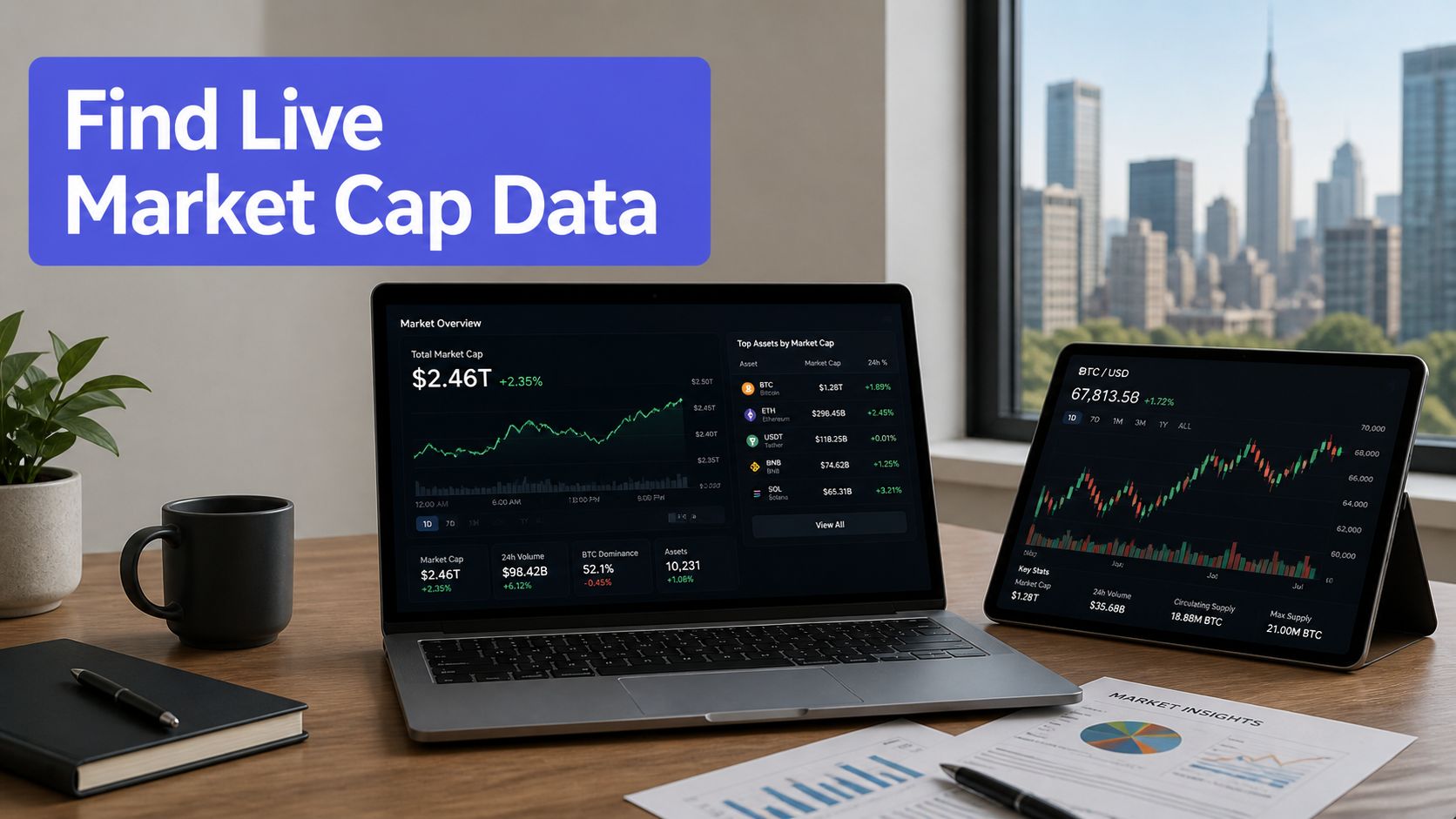
Market cap should remain a directional comparison tool during volatile conditions or supply-policy changes. It isn't a direct measure of the cash available to buy every circulating token, and it doesn't guarantee that a trader can enter or exit at the displayed price.
Interpreting Market Cap Tiers and Risk
Lisk's reported market capitalization is relatively small compared with established large-cap crypto assets (CoinMarketCap). This relative comparison helps organize research, but it does not define a universal market-cap tier or measure liquidity directly. Trading conditions can vary substantially between centralized exchanges.
That distinction matters because market cap multiplies a price by a supply estimate. It doesn't show the amount resting at each bid and ask level. A relatively small market cap can coexist with thin order books, wider spreads, and slippage when orders consume available liquidity.
What the tier can and cannot tell traders
A low-cent LSK price may make the token appear accessible, but a low unit price isn't evidence of low valuation or easy execution. The relevant execution questions concern venue coverage, pair availability, spread, order-book depth, and recent trading activity.
Market-cap rankings can also affect which assets appear in scanners and exchange-focused research. However, ranking visibility doesn't establish that an asset is listed on every venue or that a displayed market is equally liquid across exchanges.
A trader comparing Lisk with larger assets should separate three observations:
- Valuation tier: How the reported market cap compares with other assets.
- Venue access: Which supported centralized exchanges show a usable LSK market.
- Execution quality: Whether the selected pair has sufficient depth for the intended order size.
The blue-chip crypto comparison provides a useful contrast between larger established assets and smaller market-cap names. The comparison is educational, not a recommendation. Lisk's comparatively smaller reported market capitalization calls for closer attention to venue-specific conditions.
Smaller market-cap assets can experience sharper percentage moves because limited order-book depth may amplify both buying and selling pressure.
That risk lens is more useful than treating market-cap rank as a quality score. Ranking can organize a universe, but it cannot confirm liquidity, exchange support, or suitability for a particular trade.
Tracking Lisk with TradingView-Compatible Watchlists
A TradingView-compatible watchlist helps traders keep the symbol universe consistent while they compare LSK with assets in a similar market-cap range. The symbol itself must be venue-specific in practice. A generic LSK ticker doesn't identify an exchange, while a format such as EXCHANGE:PAIR identifies the venue and trading pair used by the charting workflow.
A structured list can place LSK beside selected peers, then separate those symbols by centralized exchange or market-cap filter. This prevents a common research error, comparing Lisk on one venue with a different asset universe or pair structure on another.
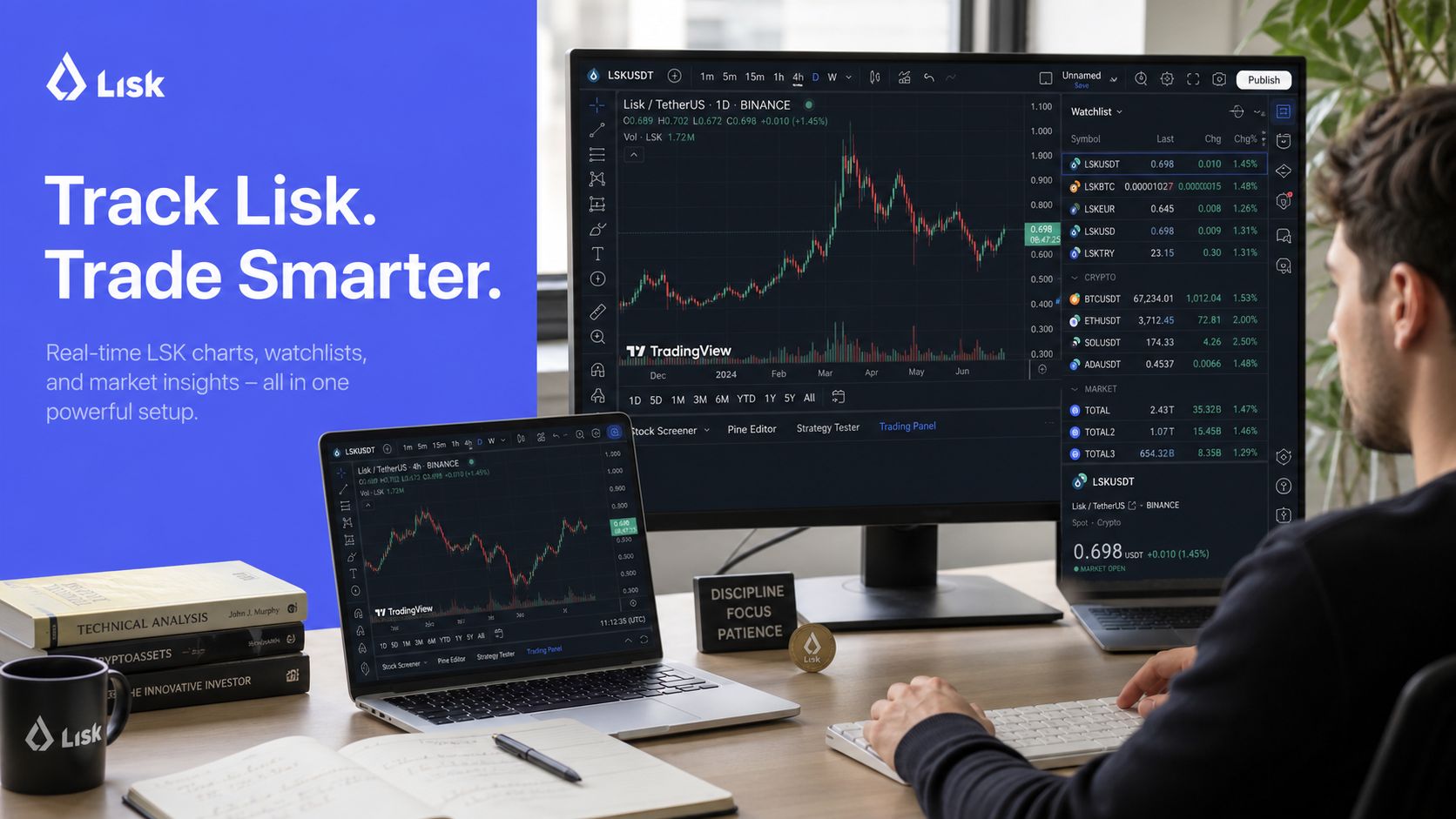
A practical list design
A focused LSK monitoring setup can contain:
- Venue list: LSK symbols from supported centralized exchanges.
- Peer list: Assets selected through a comparable market-cap filter.
- Context list: Ecosystem or category symbols used for broader comparison.
- Review list: Symbols requiring a manual check after a naming or listing change.
TradingList supports this type of symbol organization through maintained standard watchlists by centralized exchange and market capitalization, along with narrower custom lists built from supported filters. Its TradingView screener watchlist workflow is designed for selecting, formatting, and exporting symbol universes, not for generating signals or predictions.
The service uses a daily refresh cycle when source data is available. That cadence can help reflect supported listing, delisting, and naming changes, but a trader should still verify the final symbol on the intended venue before relying on it for chart review.
Connecting the metric to market structure
Market cap shouldn't be isolated from Lisk's broader transition. Official Lisk documentation describes the migration of LSK to an ERC-20 token, a fixed supply model, and Lisk's integration with Optimism's Superchain (Lisk). Those confirmed developments make a list useful not because it predicts a move, but because it keeps the relevant comparison set visible while the underlying market structure changes.
Future Shifts in Lisk Coin Market Cap
Future Lisk market-cap interpretation depends on more than the next chart candle. Governance decisions, burn policy, staking changes, and ecosystem migration can alter the relationship between circulating supply and fully diluted value.
The July 2025 vote on a proposed burn of 100 million LSK did not reach quorum, so no decision was made. Although 99.46% of participating voting power supported the burn, participation remained below the required quorum (Lisk Governance Forum). The proposal should therefore not be described as an approved burn or a rejected burn.
Official Lisk documentation confirms that LSK migrated to an ERC-20 token, adopted a fixed supply model capped at 400 million LSK, and became part of Optimism's Superchain (Lisk). Any later burn, staking, or supply-policy change should be treated as prospective unless confirmed by a subsequent official update.
A maintenance checklist
- Record the source: Save the provider used for the market-cap observation.
- Check supply fields: Compare circulating supply with the stated maximum supply.
- Separate confirmed from proposed: Label governance proposals, burns, and staking changes by status.
- Review venue symbols: Confirm the exchange prefix and pair format in TradingView.
- Compare like with like: Use the same timestamp and supply methodology when comparing assets.
- Recheck after structural news: Migration or ecosystem changes can make an older watchlist less representative.
The central question is whether a future market-cap change comes from price, circulating supply, or both. A price increase with unchanged supply has a different interpretation from a supply reduction, and neither should be evaluated without checking liquidity and exchange availability.
Lisk's historical volatility, comparatively small reported market capitalization, and provider-specific supply figures make a static ranking inadequate. A careful researcher tracks the market-cap figure, its inputs, the specific venue, and the status of any governance or migration development before drawing conclusions.
TradingList provides TradingView-compatible watchlists organized by centralized exchange, market capitalization, supported category, and ecosystem, with options for custom filtering and symbol export. Traders and researchers can visit TradingList to organize LSK with comparable symbols and maintain a more consistent market-cap monitoring workflow.