Layer 2 crypto coins are best compared through network usage, architecture, token role, and market context, not through a single ranking. The category includes optimistic rollups, ZK rollups, modular designs, gaming-focused networks, and other Ethereum scaling approaches, so a simple price list often misses the practical differences that matter during research.
How can a ticker-only roundup explain why an optimistic rollup, a ZK rollup, a modular chain, and a gaming-focused network may respond to completely different adoption drivers? Layer 2 projects use different scaling models, ecosystem strategies, and token structures, so a price list can hide the details that matter to traders, researchers, educators, and advanced TradingView users.
The practical comparison below separates optimistic rollups, ZK rollups, modular data availability, gaming specialization, token identity, and market research workflow. It also treats a generic ticker differently from a venue-specific TradingView symbol such as EXCHANGE:PAIR. Market capitalization, trading volume, exchange availability, and naming should be checked at publication time from reliable current sources, while the project descriptions explain the technical differences. The final workflow turns that research into a focused, TradingView-compatible watchlist without presenting the list as investment advice.
Table of Contents
- TradingList Professional Crypto Watchlists for TradingView
- 1. Arbitrum ARB
- 2. Optimism OP
- 3. zkSync ZK
- 4. Starknet STRK
- 5. Mantle MNT
- 6. Immutable IMX
- 7. Metis METIS
- 7-Way Layer-2 Crypto Comparison
- Build a Cleaner Layer 2 Watchlist
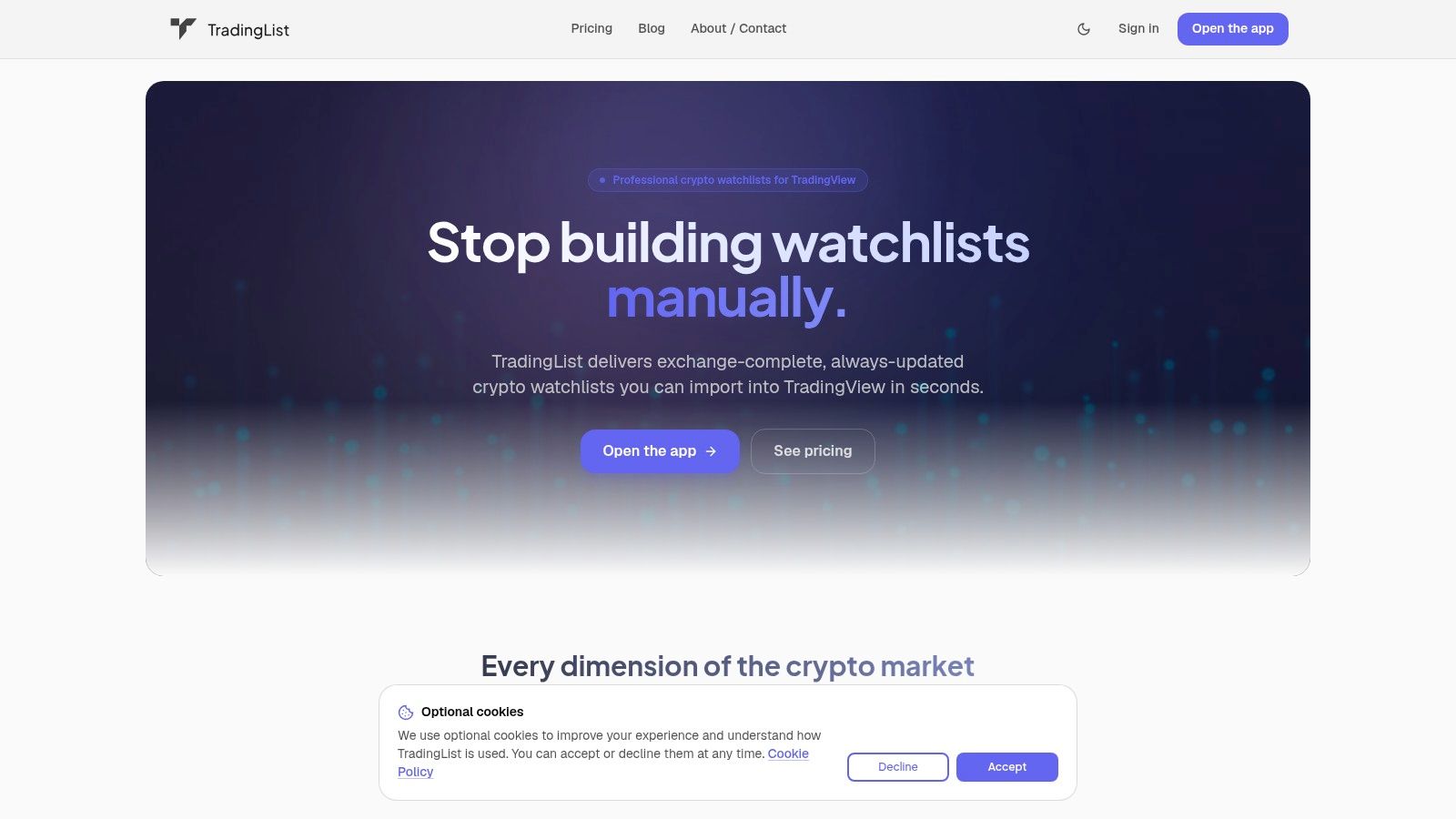
TradingList Professional Crypto Watchlists for TradingView
Layer 2 research becomes harder when the analyst has to rebuild symbols before comparing them. A project may have one asset ticker, several venues, different quote currencies, and exchange-specific prefixes. TradingList addresses that workflow problem with maintained, ready-to-import crypto watchlists organized by centralized exchange, market capitalization, supported category, and blockchain ecosystem. Its supported category structure includes a dedicated Layer 2 grouping, which gives researchers a practical starting universe instead of requiring manual discovery.
The product is designed for TradingView-compatible symbol organization, not execution or analysis. Its files use venue-specific formatting intended to reduce manual exchange-prefix and ticker cleanup before import, while the platform follows a daily refresh cycle when source data is available. That distinction matters for Layer 2 coins because a category list is only useful when the symbols can be compared consistently across the venues and quote pairs that matter to the researcher.
Practical rule: A clean symbol universe should come before chart interpretation, not after it.
Standard watchlists cover maintained exchange, market-cap, category, and ecosystem groupings. Narrower research can use Custom crypto watchlists based on supported market-cap, category, or ecosystem filters. ScreenerList builds a symbol list from market filters, DeltaList compares a reference watchlist with exchange or market variants, and FusionList combines several lists into one exportable configuration.
The platform's TradingView screener watchlist workflow is particularly relevant when an analyst wants to compare Layer 2 projects by a technical thesis first, then apply market-cap or venue filters without mixing unrelated symbols. TradingList doesn't provide signals, predictions, portfolio advice, or financial recommendations. It also doesn't provide DeFi watchlists, so its role here is limited to supported centralized-exchange, category, market-cap, and ecosystem symbol universes.
1. Arbitrum ARB
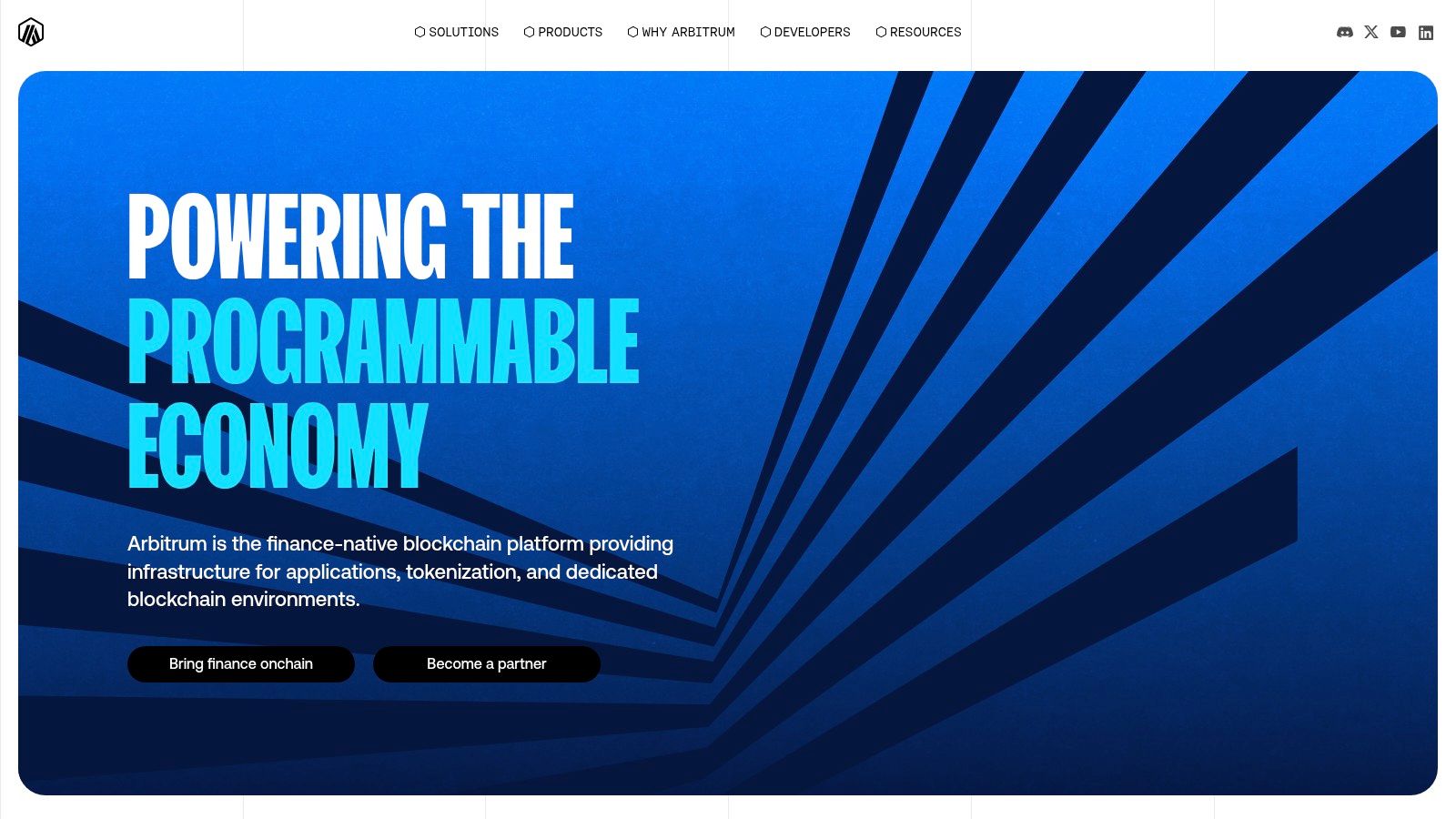
Arbitrum is an optimistic rollup family built around EVM compatibility and high throughput. Arbitrum One serves as the main general-purpose network, while Nova, Orbit chains, and the Stylus VM extend the stack into different execution and deployment models. Stylus lets developers write smart contracts in Rust, C, or C++ while retaining interoperability with the EVM, which gives the network a broader development profile than a Solidity-only environment.
Nitro provides the core architecture, and AnyTrust data-availability options give operators a way to evaluate different cost and trust assumptions. Orbit adds custom-chain deployment, allowing teams to create application-specific or ecosystem-specific chains. That flexibility is useful for monitoring because ARB exposure can represent activity on the main network, governance through ArbitrumDAO, or broader adoption of the surrounding Orbit stack.
The practical trade-off is architectural complexity. Optimistic fraud-proof designs imply challenge-window delays for some withdrawals, while Stylus and Orbit increase the number of components an analyst may need to understand before treating all Arbitrum-related activity as equivalent.
Protocol lens: Compare Arbitrum One with Nova and Orbit rather than treating the family as a single execution environment.
Token lens: ARB is associated with governance and ArbitrumDAO participation, so token ownership doesn't automatically equal direct fee exposure.
Workflow lens: A venue-specific symbol should be stored as
EXCHANGE:PAIR, not as the bareARBticker.
The crypto ticker symbol guide helps separate an asset identifier from the TradingView format required for a particular exchange. Current market capitalization and volume should be checked separately through a reliable market-data source, because those values can change independently of the protocol's technical roadmap.
Arbitrum's official site provides the network's technical and ecosystem reference point.
2. Optimism OP
Optimism is best understood as both OP Mainnet and a broader OP Stack and Superchain strategy. Instead of limiting the comparison to one rollup, analysts can examine how shared standards, cross-chain messaging, and common development patterns may connect multiple OP Stack chains. That makes OP relevant for researchers studying interoperability and ecosystem expansion, although adoption across member chains still determines whether the wider vision translates into durable activity.
The Bedrock re-architecture focused on protocol hardening and modularity. Its design includes reduced L1 data fees, two-step withdrawals, modular proof support, and a multi-client approach. The Optimism Collective provides formal governance, with OP serving as the governance token for participation in that structure. The token's governance role should be kept separate from the activity of OP Mainnet and from the usage of other OP Stack chains.
Optimism's strongest monitoring use case is an ecosystem watchlist. A trader or researcher can track OP alongside selected OP Stack symbols, then compare those assets with a market-cap list to identify whether the Superchain thesis is concentrated in the main token or distributed across related networks.
A Superchain watchlist should distinguish shared infrastructure from shared token exposure.
The principal limitation remains the optimistic-rollup withdrawal model. Withdrawals aren't equivalent to the faster finality experience associated with ZK systems, and cross-chain benefits depend on consistent adoption, tooling, and standards. Volume research should therefore separate OP from any ecosystem symbols rather than aggregating them casually.
Optimism's official documentation and ecosystem material are the appropriate starting points for verifying current stack and governance details before a list is published.
3. zkSync ZK
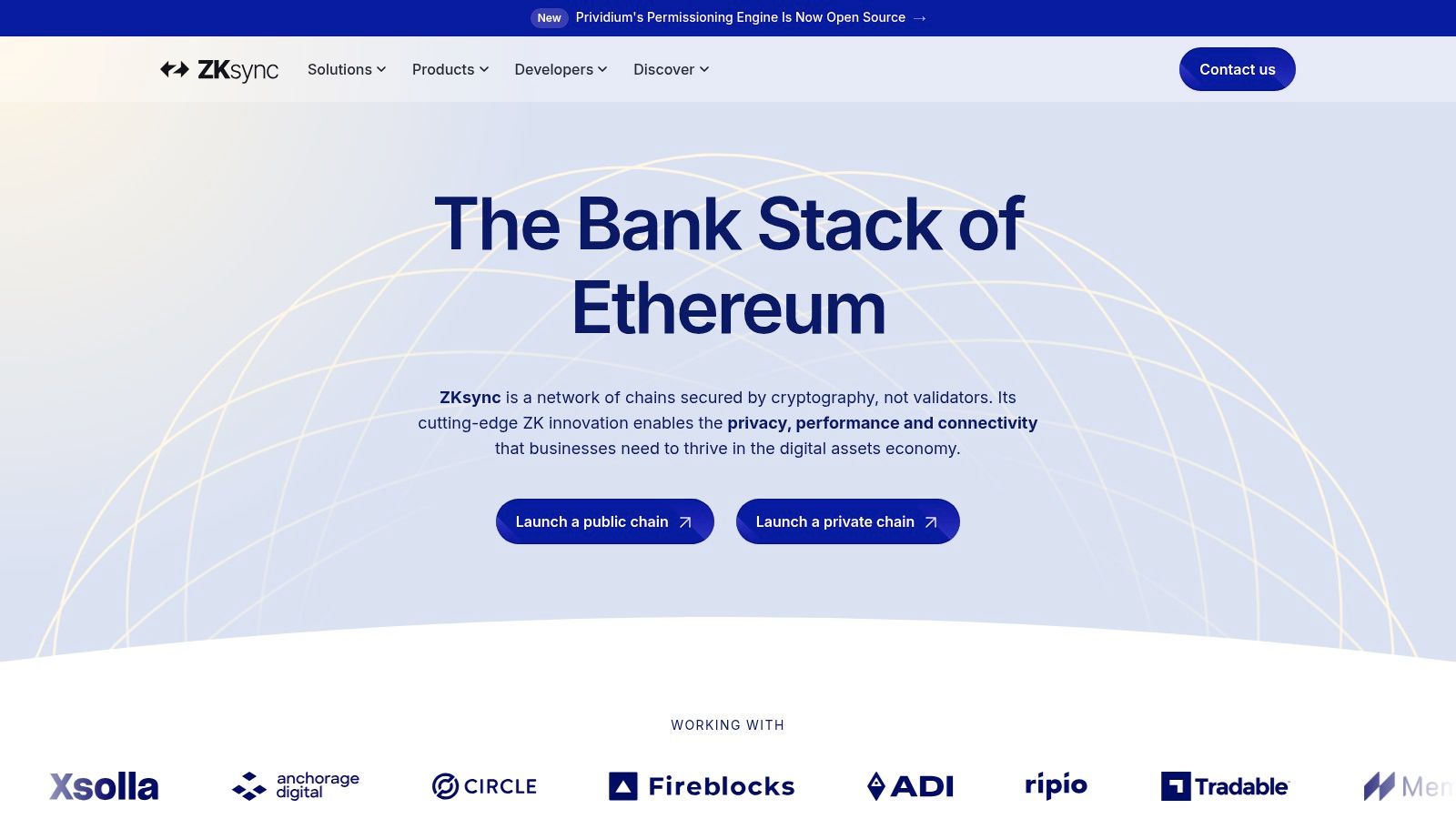
zkSync Era takes a different route through ZK rollup finality, native account abstraction, and a modular ZK Stack. Its account-abstraction design supports smart accounts, paymasters, and the possibility of using multiple tokens for fees. Those features make zkSync relevant to researchers focused on user experience, onboarding, and application designs that need more flexible transaction handling than a basic externally owned account model provides.
The ZK Stack extends the architecture beyond Era by allowing additional customizable ZK chains. That creates a useful distinction between monitoring the principal network and monitoring the broader deployment framework. A market-cap list may identify the ZK token, while an ecosystem list can help a researcher organize related networks and applications for a separate adoption review.
ZK is intended for governance and protocol upgrades through a three-body governance model, with utility evolving through proposals and implementation phases. That means the ticker shouldn't be treated as a direct proxy for every transaction or application using the stack. Analysts need to record the token role and the network role as separate fields in their research notes.
Architecture: ZK-based validity gives the project a different finality model from optimistic rollups.
User experience: Smart accounts and paymasters can reduce friction for applications with complex onboarding requirements.
Compatibility: EraVM and account abstraction may create portability quirks for tools expecting strict EVM parity.
The strongest monitoring setup combines a supported Layer 2 category list with a narrower ecosystem list, then checks current market capitalization and volume before chart import. zkSync's official website is the relevant reference for current protocol and governance information.
4. Starknet STRK
Starknet is a general-purpose ZK rollup built around STARK proofs and the Cairo programming language. Its design emphasizes high-performance smart-contract logic through a non-Solidity development stack. That makes Starknet a useful comparison point for analysts who want to distinguish proof-system innovation from EVM-first portability.
Cairo is also the main trade-off. Developers and researchers familiar with Solidity and standard EVM tooling face a steeper learning curve, so application growth should be evaluated with attention to the actual developer environment rather than assumed from the broader Layer 2 label. The project's research heritage and active mainnet development provide a strong technical identity, but Cairo adoption remains a distinct variable in ecosystem analysis.
STRK has utility for fees, staking, and governance, with distribution and staking phases introduced as decentralization develops. This gives the token a more direct protocol-role narrative than a token used primarily for governance, but token utility still doesn't establish a valuation conclusion. Market-cap and volume data should remain separate evidence.
A useful Starknet watchlist can combine the STRK token with an ecosystem filter and then compare it with EVM-compatible ZK projects. That structure exposes whether a researcher is comparing similar proof technology, similar developer tooling, or merely assets placed in the same market category.
The relevant comparison isn't “ZK versus non-ZK” alone. It is also Cairo-based execution versus EVM-based execution.
Starknet's official site supplies the project's current technical and ecosystem context. TradingView-compatible symbols should still be normalized by venue, because STRK alone doesn't identify the exchange or quote pair being charted.
5. Mantle MNT
Mantle represents the modular Layer 2 approach. Its OP Stack lineage supports EVM developer portability, while EigenDA supplies a separate data-availability layer intended to reduce data costs while maintaining Ethereum settlement. This makes Mantle useful for researchers who want to isolate data-availability economics from the execution and governance questions that dominate conventional rollup comparisons.
The MNT token is used for gas and on-chain governance. Mantle also operates with a large governance-managed treasury originating from the BitDAO merger, giving ecosystem funding and incentive decisions a prominent role in the network thesis. A market-cap watchlist can track MNT as an asset, while an ecosystem list can organize related projects without assuming that treasury activity equals sustainable user adoption.
The modular design introduces additional dependencies. Restaking-based data availability creates operational and risk considerations that differ from a rollup relying only on Ethereum data publication. Analysts should therefore record the settlement layer, execution stack, data-availability provider, and token role before comparing Mantle directly with Arbitrum or Optimism.
Portability: OP compatibility can simplify the movement of existing EVM applications.
Economics: Separate data availability changes the cost model being evaluated.
Governance: Treasury decisions can influence ecosystem direction without guaranteeing organic usage.
Mantle's official platform is the appropriate source for current architecture and ecosystem information. For a TradingView workflow, a supported ecosystem or category watchlist can provide the initial symbol universe, while current exchange availability and volume still require separate verification.
6. Immutable IMX
Immutable is the specialist in this group because its core proposition is gaming infrastructure, not general-purpose Layer 2 activity. The platform includes Immutable zkEVM, an EVM-compatible ZK rollup tuned for game applications, and Immutable X, which is based on StarkEx. It also provides gaming-oriented SDKs, marketplaces, wallet support, and developer resources.
IMX functions as a utility and governance token, with roles connected to gas, staking, and ecosystem incentives or rewards. Those roles make it important to distinguish game-platform usage from speculative token activity. A rising number of game-related announcements, for example, wouldn't by itself establish that IMX volume or network usage is sustainable. Market-cap and volume checks should be performed independently.
The multi-track architecture is both an advantage and a monitoring complication. Developers can use purpose-built infrastructure, but users and analysts may encounter migration, bridging, or asset-location questions when comparing Immutable X with Immutable zkEVM. General DeFi researchers may also find the gaming-first focus less relevant than a broad execution-layer network.
A focused workflow can start with a supported ecosystem watchlist, then compare IMX against a broader Layer 2 category and a gaming category. The gaming crypto coins list guide is useful when the research question shifts from rollup architecture to gaming-sector symbol organization.
For Immutable, the adoption question is whether game infrastructure creates repeat transaction behavior, not whether the token merely appears in a Layer 2 category.
Immutable's official platform provides the current reference for its gaming stack and developer resources.
7. Metis METIS
Metis is an Ethereum Layer 2 that readers should approach as both a network and a tokenized ecosystem, rather than as a bare ticker on a list. The official Metis Andromeda documentation is the right starting point for describing the network and checking how the project currently frames its Ethereum Layer 2 design.
For TradingView users, the practical point is straightforward: METIS by itself is only an asset identifier. Before import, verify the exchange-qualified TradingView symbol, quote pair, and current listing format so the watchlist uses the exact EXCHANGE:PAIR syntax supported by the venue you want to chart.
Metis fits best in a comparison when the researcher wants another Ethereum Layer 2 reference point beyond the largest rollup brands. As with the other projects in this list, token role, ecosystem activity, exchange availability, and current market data should be checked separately instead of being collapsed into a single ranking.
7-Way Layer-2 Crypto Comparison
| Coin | Architecture focus | Token role emphasis | Main research angle | TradingView workflow note | Key advantage to monitor |
|---|---|---|---|---|---|
| Arbitrum (ARB) | Optimistic rollup family with EVM compatibility | Governance through ArbitrumDAO | Compare Arbitrum One, Nova, and Orbit separately | Save the exact venue symbol as EXCHANGE:PAIR |
Broad ecosystem and flexible deployment stack |
| Optimism (OP) | Optimistic rollup, OP Stack, Superchain | Governance in the Optimism Collective | Distinguish OP Mainnet from broader OP Stack adoption | Track OP with selected OP Stack symbols, not as one merged thesis | Strong ecosystem standardization and interoperability focus |
| zkSync (ZK) | ZK rollup with account abstraction and ZK Stack | Governance and protocol-upgrade role | Separate network usage from stack-level expansion | Confirm venue formatting before import | UX-oriented smart account design |
| Starknet (STRK) | ZK rollup using STARK proofs and Cairo | Fees, staking, and governance | Compare proof model and developer tooling, not category label alone | Normalize symbols by exchange and quote pair | Distinct Cairo and STARK technical profile |
| Mantle (MNT) | Modular Layer 2 with separate data availability | Gas and governance | Evaluate modular DA assumptions alongside execution | Use category or ecosystem lists, then verify current listings | OP compatibility plus modular cost model |
| Immutable (IMX) | Gaming-focused Layer 2 infrastructure | Utility, governance, staking, incentives | Separate gaming-platform adoption from token speculation | Compare with both Layer 2 and gaming watchlists | Specialized gaming stack and tooling |
| Metis (METIS) | Ethereum Layer 2, reviewed through official Andromeda docs | Token and network should be evaluated separately | Add another Ethereum Layer 2 reference point to the watchlist | Verify the exchange-qualified TradingView symbol before import | Useful for broader Layer 2 comparison beyond the most discussed names |
Build a Cleaner Layer 2 Watchlist
The comparison becomes more useful when it turns into a repeatable research process. First, verify current market capitalization and trading volume from a reliable market-data source. Different sources can categorize Layer 2 assets differently, so methodology and timestamp should be checked before any figures are compared.
The sector's breadth also argues against treating every project equally. A broad category list is a discovery tool, not a substitute for prioritization. In practice, researchers usually get better results by narrowing the field to the networks, ecosystems, and exchange listings that match the exact TradingView workflow they plan to use.
Practical rule: Compare protocol usage, token role, market-cap context, volume, and symbol availability as separate columns.
A supported Layer 2 category watchlist can provide the starting universe. An ecosystem watchlist can narrow the review to Arbitrum, Optimism, zkSync, Starknet, Mantle, Immutable, or Metis. Custom crypto watchlists are relevant when the analyst needs narrower category, market-cap, or ecosystem filters. ScreenerList fits market-filtered research, DeltaList fits comparisons between a reference list and exchange or market variants, and FusionList fits combined exports.
Before importing, separate a generic ticker such as ARB, IMX, or METIS from a venue-specific TradingView symbol such as EXCHANGE:PAIR. Check the exchange prefix, pair formatting, ticker naming, and current listing status. TradingList organizes supported symbols for TradingView-compatible workflows, but it isn't an exchange, broker, trading platform, signal service, prediction engine, portfolio adviser, or financial adviser. The list is a research framework, not a recommendation.
TradingList provides maintained, TradingView-compatible crypto watchlists organized by supported exchanges, market-cap tiers, categories, and ecosystems, including a Layer 2 starting universe. Researchers comparing ARB, OP, ZK, STRK, MNT, IMX, and METIS can visit TradingList to filter, compare, combine, and export cleaner symbol lists for charting and market review.